Vitamin D contributes to the normal function of the immune system and the maintenance of normal bones, but for much of the year the sun in our climate is too weak for the skin to make enough. Answer a few quick questions: with a blood test result, we'll explain what your level means, and without one, you'll get our guidance for your life stage.
Made by experts · About 1 minute · For adults
Understand your blood testSee where your 25(OH)D level sits on a clear 6-step scale.
Only what you needNo guesswork: guidance matched to your blood test or life stage.
Honest guidanceWhen to retest, and when to ask your doctor first.
Why vitamin D
In our climate the sun only helps from April to mid-September, so for most of the year vitamin D has to come from food or supplements.
Numbers worth knowing
Why vitamin D matters for adults
Vitamin D needs change with life stage. These figures sit behind every question in the quiz and the guidance you'll get at the end.
1000–2000
IU of vitamin D3 a day is our guidance for adults, always paired with K2.
2000 IU+
a day is what we recommend from age 60, as the body's ability to make and absorb vitamin D decreases with age.
100–150
nmol/l (40–60 ng/ml) of 25(OH)D in the blood is the level we aim for.
5½ months
a year, from April to mid-September: the only time the sun in our climate is strong enough for the skin to make vitamin D, mainly between 10 am and 3 pm.
Take the quiz
Find out what your body needs
Tap an answer to move on. You can go back anytime.
Up to 7 quick questions
About 1 minute
Results instantly
Part 1 · Blood testQuestion 1 of 7
Blood test
Have you ever had a blood test that measured your vitamin D level?
Blood test
What range is your blood vitamin D (25-OH-D) level in?
Choose the range that matches your lab result.
Why are there different units?
Laboratories use slightly different units, but both are equally valid. Just check carefully which unit your lab results use. ng/ml is the mass of 25-hydroxyvitamin D per millilitre of blood, while nmol/l is the number of 25-hydroxyvitamin D molecules per litre of blood. Converting is simple: 1 ng/ml = 2.5 nmol/l.
About you
Do you belong to any of these groups?
Sunlight
Are you regularly in direct sunlight without UV protection?
At least 15 minutes, 3 times a week, from April to mid-September.
Skin type
Do you have a darker skin phototype?
You tan easily and rarely burn.
Diet
Do you eat wild-caught fatty fish at least 3 times a week?
Such as wild salmon, mackerel or sardines.
Immune system
Do you get sick often or catch infections easily?
Diet
Do you follow a specific diet?
Optional
Would you like to get your results by email?
Enter your name and email so we can send you your results and helpful content from our nutrition team. Prefer not to? Skip straight to the results.
This quiz is made for adults
For children up to 15, please take our kids vitamin D quiz instead. It gives you guidance and doses matched to your child's exact age.
Here's what your blood test means or, without one, our guidance for your life stage, plus the products we recommend.
You're on the list. Your results are on their way to your inbox.
More than a product list
Scroll down for your vitamin D guide: daily guidance for every life stage, what affects your level, and everyday tips.
Your answers · No risk factors
It looks like you're doing everything right
Based on your answers, none of the common lifestyle risk factors for low vitamin D apply to you. Even so, it's worth paying attention to your vitamin D intake over the long term, from food or supplements.
Why it still matters
The sun takes a breakFrom mid-September to March, the sun in our climate is too weak for the skin to make vitamin D, however much time you spend outdoors.
Few foods contain itOnly a handful of foods are good sources, so even a varied diet with fatty fish rarely covers your needs on its own.
Your body needs it all yearVitamin D contributes to the normal function of the immune system and the maintenance of normal bones, and that need doesn't stop in winter.
Our advice: keep up the outdoor time and fatty fish, and consider vitamin D3 with K2 in the darker months from mid-September to March. A 25(OH)D blood test is the only way to know your actual level.
Your blood test · 25(OH)D
Significant deficiency
Your results indicate a significant deficiency. The optimal range is 100–150 nmol/l. We recommend high-quality vitamin D3 (1500–2000 IU daily, or at least 2000 IU daily if you're over 60) paired with vitamin K2.
Based on the 25-OH vitamin D level measured in your blood, you have a significant vitamin D deficiency. The optimal level is 100–150 nmol/l (40–60 ng/ml). Our Vitamin D3 + K2 drops provide vitamin D3 together with vitamin K2. For a personal dosage recommendation, email us at info@mytrime.com.
Deficiency
Values are insufficient. We recommend a maintenance dose of vitamin D3 + K2: 1500–2000 IU a day, or at least 2000 IU if you're over 60.
Values between 52 and 70 nmol/l (20–28 ng/ml) are insufficient, which means you have a vitamin D deficiency. The optimal level is 100–150 nmol/l (40–60 ng/ml). Vitamin D contributes to the normal function of the immune system, so we recommend a regular maintenance dose of vitamin D3 combined with vitamin K2: 1500–2000 IU a day, or at least 2000 IU if you're over 60. For a personal dosage recommendation, email us at info@mytrime.com.
Mild deficiency
Mild deficiency detected. Focus on fatty fish and 15 minutes of daily sun, or supplement with D3 + K2 during winter.
Results between 71 and 99 nmol/l (28–40 ng/ml) correspond to a mild vitamin D deficiency, and we recommend levels between 100 and 150 nmol/l (40–60 ng/ml). Eat wild-caught fatty fish (mackerel, tuna, salmon) about 3 times a week and get about 15 minutes of daily sun without sunscreen from April to mid-September. If you eat little fish, or it's winter, we recommend vitamin D3 combined with vitamin K2. Retest your level at least once a year, ideally in winter.
Optimal level
Congratulations, your levels are ideal! Recheck in 6 months, especially after winter.
Your vitamin D level is in the optimal range of 100–150 nmol/l (40–60 ng/ml). Whether it comes from sun, food or a supplement, what you're doing is working. To help keep your level there, especially from mid-September to March when the sun is too weak for the skin to make vitamin D, a daily maintenance dose of vitamin D3 with K2 is an easy option. We recommend retesting after about 6 months, especially after the winter months. If you already take vitamin D3, don't forget to combine it with vitamin K2.
Vitamin D excess
Slightly above recommended levels. Stop D3 supplements for now and focus on standalone vitamin K2.
Your result is slightly above the recommended range, so there's no need for vitamin D supplements right now, including multivitamins that contain it, such as Daily F20 Complex. Vitamin D is fat-soluble, so it builds up in the body and can be overdosed, especially with long-term, very high doses. Values above 200 nmol/l (80 ng/ml) are considered harmful, so check your level at least once a year, ideally in winter. For now, focus on standalone vitamin K2, which works in synergy with vitamin D. Vitamin K contributes to the maintenance of normal bones.
Toxic level: see your doctor first
Hazardous level! Consult your doctor immediately and stop all vitamin D supplements. Recheck in 3 months.
A 25-OH vitamin D level above 200 nmol/l (80+ ng/ml) is considered dangerous to health. Talk to your doctor about the result and stop all supplements containing vitamin D, including multivitamins: Daily F20 Complex, for example, provides 1000 IU of vitamin D3 a day. Recheck your level after about 3 months. In the meantime, focus on standalone vitamin K2, which contains no vitamin D.
0–51
Significant deficiency
You
52–70
Deficiency
You
71–99
Mild deficiency
You
100–150
Optimal
You
151–200
Excess
You
200+
Toxic
You
Values in nmol/l. To convert from ng/ml, multiply by 2.5.
For your life stage
Pregnant or breastfeeding
Pregnancy and breastfeeding
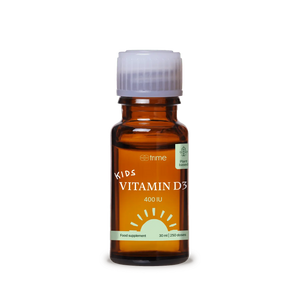
Your vitamin D supply matters for you and your baby. We recommend our plant-based Kids Vitamin D3 drops or Vitamin D3 + K2 drops.
Vitamin D contributes to the normal absorption and utilisation of calcium and phosphorus and has a role in the process of cell division. Both drops are plant-based and easy to dose drop by drop, so you can agree the right amount with your doctor or midwife.
Adequate intake
600 IU (15 µg) a day
Upper limit
4,000 IU (100 µg) a day
EFSA values. Check with your doctor or midwife before starting new supplements.
Over 60 years
Adults over 60
Our ability to make and absorb vitamin D decreases with age, so we recommend at least 2000 IU a day.
Choose our Vitamin D3 + K2 drops, or 1 capsule of our Vitamin D3 2000 IU paired with vitamin K2. Vitamin D helps to reduce the risk of falling associated with postural instability and muscle weakness. Falling is a risk factor for bone fractures among men and women 60 years of age and older. Vitamin K contributes to the maintenance of normal bones.
Our guidance
2000 IU+ a day
Upper limit
4,000 IU (100 µg) a day
The beneficial effect on falls is obtained with 20 µg (800 IU) of vitamin D a day from all sources. Upper limit: EFSA.
Adults
General adults
We recommend 1000–2000 IU of vitamin D3 a day, always paired with vitamin K2.
In our climate the sun is only strong enough for the skin to make vitamin D from April to mid-September, and few foods contain much of it. Vitamin D contributes to the normal absorption and utilisation of calcium and phosphorus and to the normal function of the immune system, and vitamin K contributes to the maintenance of normal bones.
Our guidance
1000–2000 IU a day
Upper limit
4,000 IU (100 µg) a day
Upper limit: EFSA.
Before you start: if you take medication regularly, especially blood thinners such as warfarin, or have kidney disease, check with your doctor or pharmacist first.
Based on your answers
Recommended for you
Choose the one that suits you best
Choose the drops, or the D3 capsules paired with K2
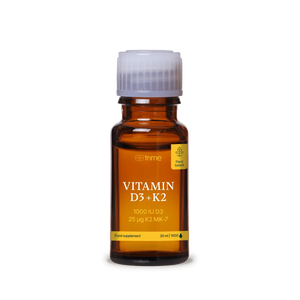
We recommend 1000–2000 IU of vitamin D3 a day for adults, always paired with vitamin K2, and these drops combine both.
From 60, we recommend at least 2000 IU of vitamin D3 a day, and these drops provide it together with vitamin K2.
Plant-based vitamin D3 and vitamin K2 together in easy-to-adjust drops. Agree the right dose with your doctor or midwife.
Plant-based vitamin D3 and vitamin K2 together in one bottle of drops, so you get both vitamins we always recommend pairing in a single daily dose.
Your test shows a significant deficiency: we recommend 1500–2000 IU a day, or at least 2000 IU if you're over 60.
Your test shows a deficiency: we recommend a maintenance dose of 1500–2000 IU a day, or at least 2000 IU if you're over 60.
With a mild deficiency, focus on fatty fish and sun, and take D3 + K2 during winter.
Your level is optimal. A daily maintenance dose helps keep it there, especially from mid-September to March when the sun can't help. Recheck in about 6 months.
Vitamin D contributes to the normal absorption and utilisation of calcium and phosphorus and to the normal function of the immune system. Vitamin K contributes to the maintenance of normal bones.
About this product
D3 and K2 (MK-7) from natural plant-based sources
Mixed in organic coconut MCT oil
1000 IU D3 + 25 μg K2 per dose · 500 doses · vegan
Already taking Daily F20 Complex? It provides 1000 IU of vitamin D3 a day, so count it in your total.
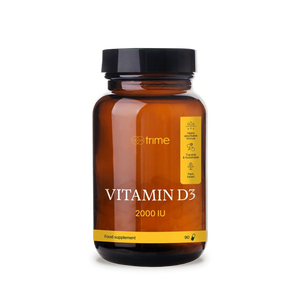
Prefer capsules? 1 capsule a day provides 2000 IU of vitamin D3, the top of our 1000–2000 IU range for adults.
Prefer capsules? 1 capsule a day provides 2000 IU of vitamin D3, the minimum we recommend from age 60.
Prefer capsules? 1 capsule a day provides 2000 IU of vitamin D3, a simple alternative to the drops.
Your test shows a level below the optimal range: 1 capsule (2000 IU) a day covers the dose we recommend.
With a mild deficiency, focus on fatty fish and sun, and supplement during winter.
This capsule contains vitamin D3 only, and we always recommend pairing D3 with vitamin K2, so we've added our Vitamin K2 capsules to your recommendations. Vitamin D contributes to the normal function of the immune system and the maintenance of normal bones and teeth.
About this product
Vitamin D3 (cholecalciferol) from non-GMO lichen
2000 IU per capsule · 1 capsule a day
90 capsules · 90 doses · vegan
Pregnant or breastfeeding? Choose the Vitamin D3 + K2 drops instead, as these capsules aren't recommended in pregnancy.
Already taking Daily F20 Complex? It provides 1000 IU of vitamin D3 a day, so count it in your total.
Your level is above the optimal range, so pause vitamin D3 and focus on standalone vitamin K2, at 1 capsule a day.
Pairs with the D3 capsules
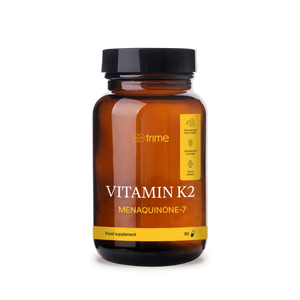
The Vitamin D3 capsules contain D3 only, so take 1 K2 capsule a day alongside them. Vitamin K2 works in synergy with vitamin D3, which is why we always recommend the two together.
With a level above 200 nmol/l, stop all vitamin D and see your doctor. Standalone vitamin K2 contains no vitamin D.
Vitamin K contributes to the maintenance of normal bones and to normal blood clotting, so if you take blood thinners, ask your doctor first.
About this product
Vitamin K2 MK-7, 120 μg per capsule
Obtained by natural fermentation from chickpeas
90 capsules · 90 doses · vegan
Pregnant or breastfeeding? Choose the Vitamin D3 + K2 drops instead, as these capsules aren't recommended in pregnancy.
Pregnant or breastfeeding? These capsules aren't recommended in pregnancy, so talk to your doctor or midwife about your result before taking any supplement.
€26,99
Want a more precise result? A 25(OH)D blood test is the only way to know your actual level. Ask your doctor, then retake the quiz with the result.
Keep an eye on it. We recommend retesting your vitamin D level at least once a year, ideally in winter when sunlight is low.
Understand the results
Your vitamin D guide
A quick primer on how vitamin D needs change with life stage, and what affects your level.
Daily guidance by life stage
The daily amounts this quiz recommends, next to the upper limit set by the European Food Safety Authority (EFSA): the most considered safe every day over the long term, from all sources combined.
Daily vitamin D guidance in this quiz and EFSA tolerable upper intake level by group
Group
Daily guidance
Upper limit
General adults You
1000–2000 IU
100 µg (4,000 IU)
Over 60 You
At least 2000 IU
100 µg (4,000 IU)
Pregnant / breastfeeding You
600 IU
100 µg (4,000 IU)
Children 0–15
400–600 IU, by age
1,000–4,000 IU, by age
Deficiency or significant deficiency (blood test) Your test
1500–2000 IU, at least 2000 IU from 60
100 µg (4,000 IU)
EFSA's adequate intake for adults is 15 µg (600 IU) a day from all sources. 1 capsule of Vitamin D3 = 2000 IU. 1 µg of vitamin D = 40 IU. Upper limits: European Food Safety Authority (EFSA).
Target blood level: 25(OH)D of 100–150 nmol/l (40–60 ng/ml).
What affects your vitamin D
Worth a look
Sunlight
Sun on the skin is the main natural source of vitamin D, but in our climate it only works from April to mid-September, mostly between 10 am and 3 pm.
Good to know: it takes at least 15 minutes with the face, neck and arms uncovered.
Worth a look
Skin type
More melanin protects the skin from the sun but slows vitamin D production, so darker skin makes less vitamin D from the same amount of sun.
Good to know: with darker skin, you're more likely to run low.
Worth a look
Fatty fish
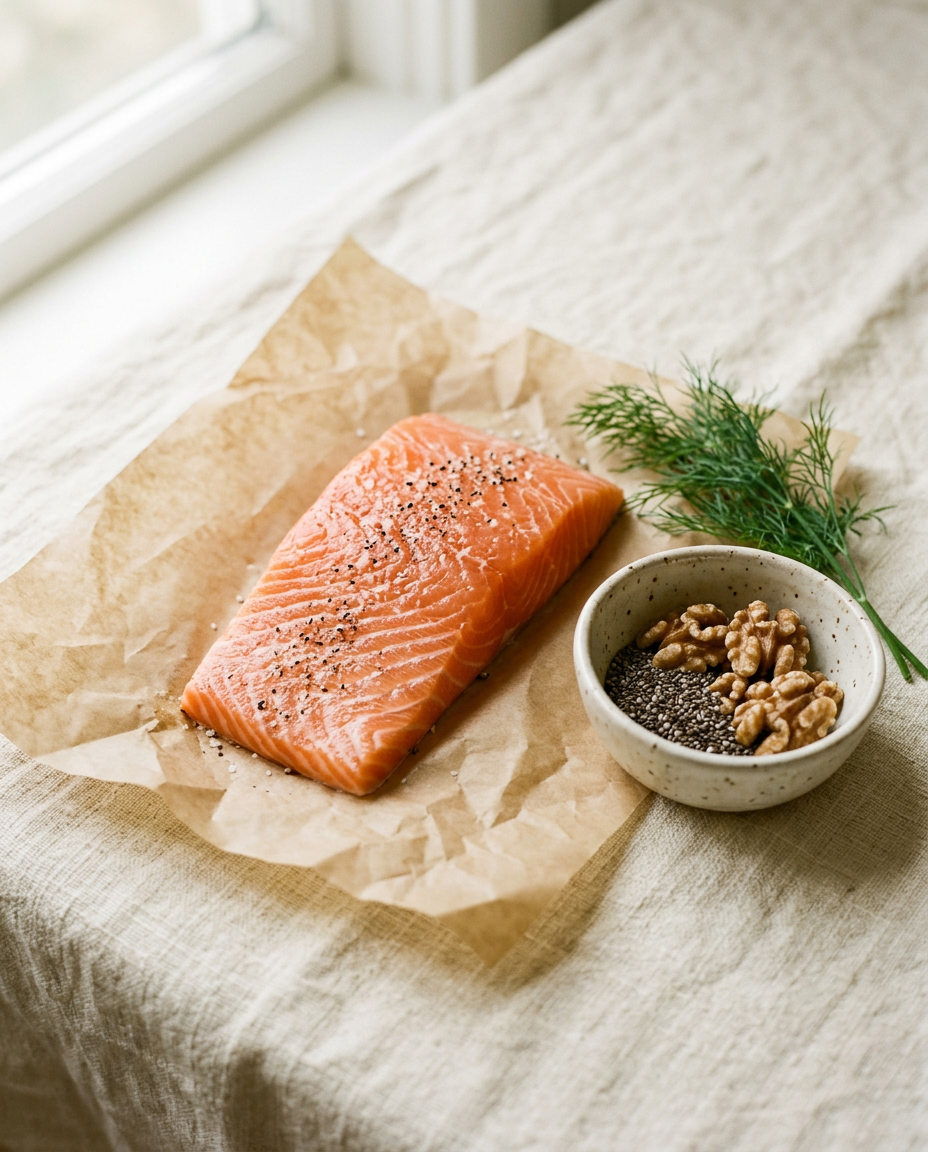
Wild-caught fatty fish is the main food source of vitamin D. Vitamin D breaks down at high heat, so deep-fried fish leaves very little of it.
Good to know: aim for 3 times a week, baked or steamed.
Worth a look
Plant-based diets
Plant-based diets contain almost no vitamin D, so a deficiency is much more likely, and vegans need a plant-based D3 source.
Good to know: Trime vitamin D3 comes from lichen, so it's plant-based.
Worth a look
Immune system
Vitamin D contributes to the normal function of the immune system. If you get sick often, it's worth making sure your vitamin D intake is covered, especially from mid-September to March, when the sun is too weak for the skin to make it.
Good to know: a 25(OH)D blood test is the only way to know your actual level.
Everyday tips
Get more vitamin D every day
Eat wild-caught fatty fish like salmon, mackerel or sardines 3 times a week.
Cook fish gently, baked or steamed below 180 °C, rather than deep-fried.
From April to mid-September, aim for 15 minutes of midday sun on face and arms.
Everyday tips · Plant-based
Cover what plant foods can't
Plant foods contain almost no vitamin D3, so a daily supplement matters all year round.
Choose D3 from lichen: Trime vitamin D3 is fully plant-based and vegan.
From April to mid-September, aim for 15 minutes of midday sun on face and arms.
If you take medication regularly, especially blood thinners, or have kidney disease, check with your doctor or pharmacist before starting supplements. This quiz is for general education and isn't a substitute for personal medical advice.
The expert behind the quiz
Clear science, carefully checked
Šárka Kůrková
Nutrition content specialist & quality control at Trime
Šárka writes our educational content and also manages laboratory testing for Trime supplements. Studies in naturopathy and love for writing naturally come together in the work at Trime. She enjoys exploring the science behind nutrition and health and turning complex research into clear, practical information that helps people make informed decisions.
FAQ
Questions about vitamin D for adults
Straight answers on doses, blood tests and choosing the right product. Can't find yours? Email us at info@mytrime.com.
Do I need vitamin D if I spend a lot of time outside?
Sunlight is the main natural source, but in our climate the skin only makes vitamin D effectively from April to mid-September, mainly between 10 am and 3 pm, and only with enough skin uncovered and no sun cream. For the rest of the year, food and supplements matter much more. Darker skin also makes less vitamin D from the same amount of sun.
How much vitamin D do adults need?
The European Food Safety Authority (EFSA) sets the adequate intake for adults at 600 IU (15 µg) a day from all sources, with a safe upper limit of 4,000 IU (100 µg). In this quiz we recommend 1000–2000 IU a day for adults, and at least 2000 IU from age 60. With a blood test result, the recommendation follows your level.
What is a good vitamin D level?
We aim for a 25(OH)D blood level of 100–150 nmol/l (40–60 ng/ml). Labs report it in either unit, and converting is simple: 1 ng/ml = 2.5 nmol/l. Below 100 nmol/l we consider it a deficiency of some degree, and above 150 nmol/l there's no need for extra vitamin D.
Why is vitamin K2 recommended with vitamin D3?
The two vitamins play complementary roles in calcium metabolism. Vitamin D contributes to the normal absorption and utilisation of calcium and phosphorus, while vitamin K2 activates proteins such as osteocalcin. Vitamin K contributes to the maintenance of normal bones.
We use K2 in its MK-7 form, which stays active in the body longer, so one daily dose is enough. Our Vitamin D3 + K2 drops combine both, and our Vitamin K2 capsules provide K2 on its own.
Vitamin K also contributes to normal blood clotting, so if you take blood thinners such as warfarin, consult your doctor first.
Can I get too much vitamin D?
Yes. Vitamin D is fat-soluble, so it builds up in the body and can be overdosed, especially with long-term, very high doses. EFSA sets the safe daily upper limit for adults at 4,000 IU, from all sources combined, so count multivitamins too: Daily F20 Complex, for example, provides 1000 IU of D3 a day. In the blood, levels above 200 nmol/l (80 ng/ml) are considered harmful. If your level is that high, talk to your doctor and stop all supplements containing vitamin D.
I'm pregnant or breastfeeding. What should I take?
We recommend our plant-based Kids Vitamin D3 drops or Vitamin D3 + K2 drops. Both are easy to dose drop by drop, so you can agree the right amount with your doctor or midwife. Check with them before starting any new supplement in pregnancy.
Is this quiz right for my child?
This quiz is made for adults. For children, take our kids vitamin D quiz: it gives you the guidance and dose for your child's exact age, from babies to teenagers.
A 25(OH)D test is the only way to know your actual level, so ask your doctor. We recommend testing at least once a year, ideally in winter when sunlight is low. If you take medication regularly, especially blood thinners, or have kidney disease, check with your doctor or pharmacist before starting supplements.
From the Trime blog
Keep learning about vitamin D
Our nutrition team's guides to vitamin D, its partners and blood tests, written to help you understand, not just to sell.
Take the quiz and get your vitamin D plan in about a minute.
Customer reviews
Trusted by customers across Europe
What our customers say about Trime: clean ingredients, honest dosing and supplements they're happy to take every day.
4.77
Based on 857 verified reviews
“A great product, especially if you get little sun or, like me, work from home most of the day.”
Francisco J.V.G.
Verified review · Vitamin D3 + K2
“I appreciate the clean ingredients and high-quality craftsmanship.”
Diana P.
Verified review
“Excellent product, with the right ratio of active ingredients, in a glass bottle.”
Viktoria
Verified review
“A high-quality multivitamin that really makes sense. I recommend it!”
Daily F20 Complex customer
Verified review
Customers mention most:
QualityIngredientsFormatDosageTaste
Echte Zutaten
Wir wählen Quellen und Formen, die echten Lebensmitteln so nahe wie möglich kommen. Dein Körper weiß von Natur aus, wie er damit umgehen muss.
Echte Sicherheit
Unsere Nahrungsergänzungsmittel enthalten keine Pestizide, Zusatzstoffe oder bedenkliche Füllstoffe. Deshalb geben wir sie unseren eigenen Kindern ohne Bedenken.
Real Production
Fermentierung, Gefriertrocknung, Keimung oder schonende Pressung. Bei der Herstellung machen wir keine Abstriche, die die Qualität oder Wirksamkeit der Nährstoffe beeinträchtigen würden.
Real Care
Wir lehnen eine Welt ab, die nur vom Profit getrieben ist. Jede Entscheidung, die wir treffen, basiert auf deiner Sicherheit und der Zukunft unseres Planeten.
Wenn du eine Auswahl triffst, wird die Seite komplett neu geladen.










 For your life stage